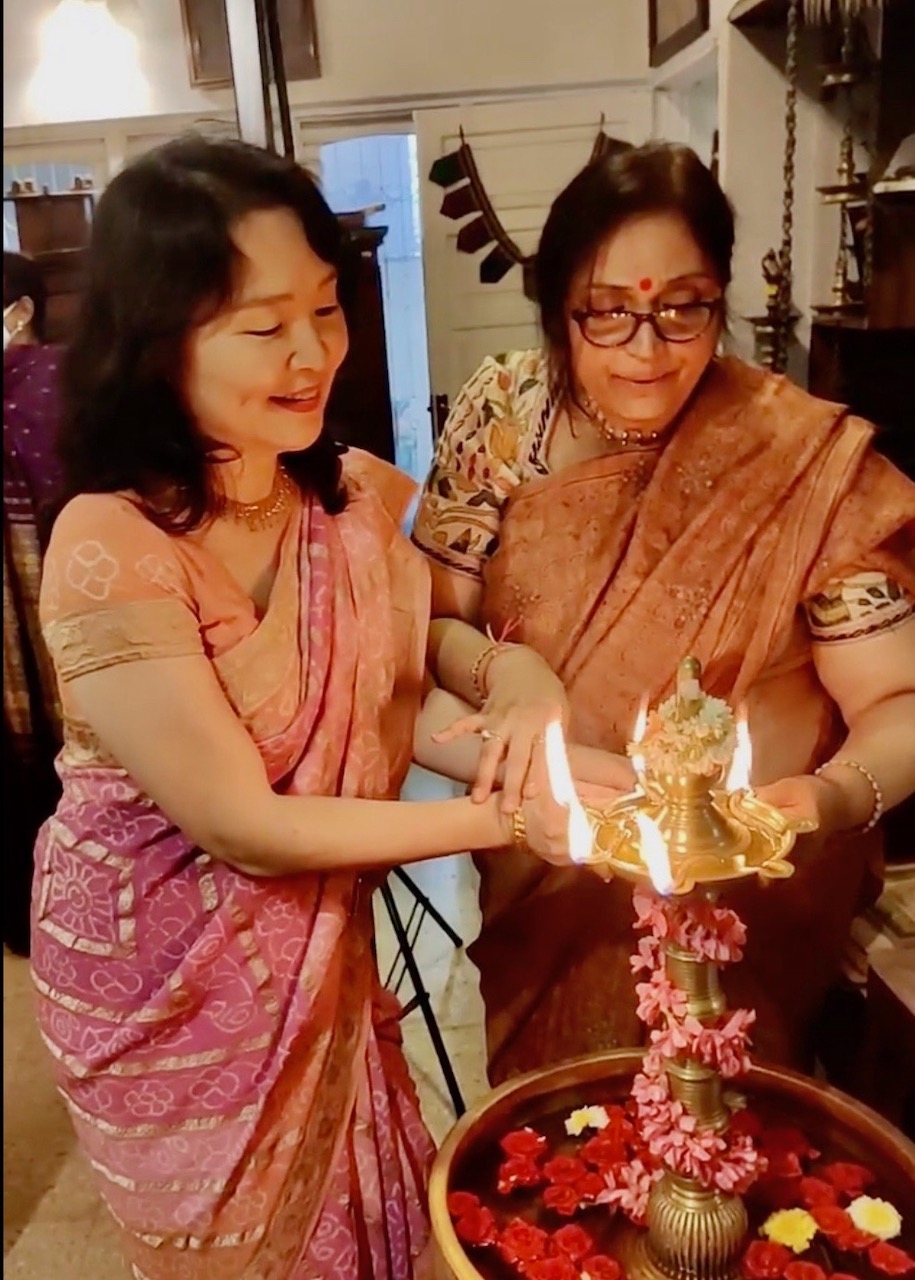
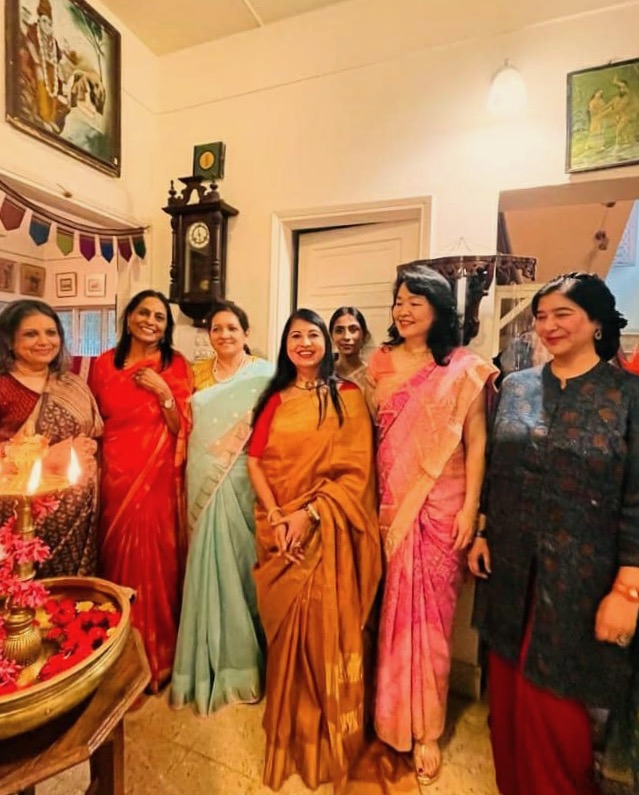
昨日は、バンガロールの骨董品店「Vermilion House」を訪れた。本日から3日間に亘って開催されるSHIBORI製品のブランド「MURA Collective」の展示会のオープニング・セレモニーに招待されたからだ。
Yesterday, I visited “Vermilion House” in Bangalore. I was invited to the opening ceremony of the exhibition of SHIBORI brand “MURA Collective,” which will be held for three days from today.
日本では「絞り」「絞り染め」、英語ではTie&Dye、インドではバンダーニ(Bandhani)と呼ばれる布作りの技法。歴史は遥か5000年前のインダス文明に遡る。インドで生まれた染色技術が、シルクロードを経て日本に渡来しのたは7世紀ごろ。奈良時代には日本独自の多様な技法が次々と誕生した。中でも江戸時代に隆盛を極めた京都の「鹿の子絞り」は、広く知られるところだ。
Shibori is a cloth-making technique known as “Tie & Dye” in English, and “Bandhani” in India. The history of this technique dates back to the Indus civilization. The dyeing technique originated in India and came to Japan via the Silk Road around the 7th century. In the Nara period (710-794), various techniques were born one after another in Japan. Among them, Kyoto’s “Kanoko-Shibori,” which reached its peak in the Edo period, is widely known.
日本で育まれた絞りの技術は、ラビンドラナート・タゴールによってインドにもたらされたという。インド国歌を作詞作曲、ノーベル文学賞を受賞した偉大なる詩人、思想家タゴール。彼は岡倉天心との親交も深く、何度も来日している。伝統芸術の復興や手工芸の存続にも尽力していた彼の情熱は、継承されてきた。1997年には、北インドのアーメダバードで、第2回国際絞りシンポジウムが開催されるに至った。
It is said that the Shibori technique developed in Japan was brought to India by Rabindranath Tagore. He was a close friend of Kakuzo (Tenshin) Okakura and visited Japan many times. His passion for the revival of traditional arts and the survival of handicrafts has been inherited, and in 1997, the 2nd International Shibori Symposium was held in Ahmedabad in 1997.

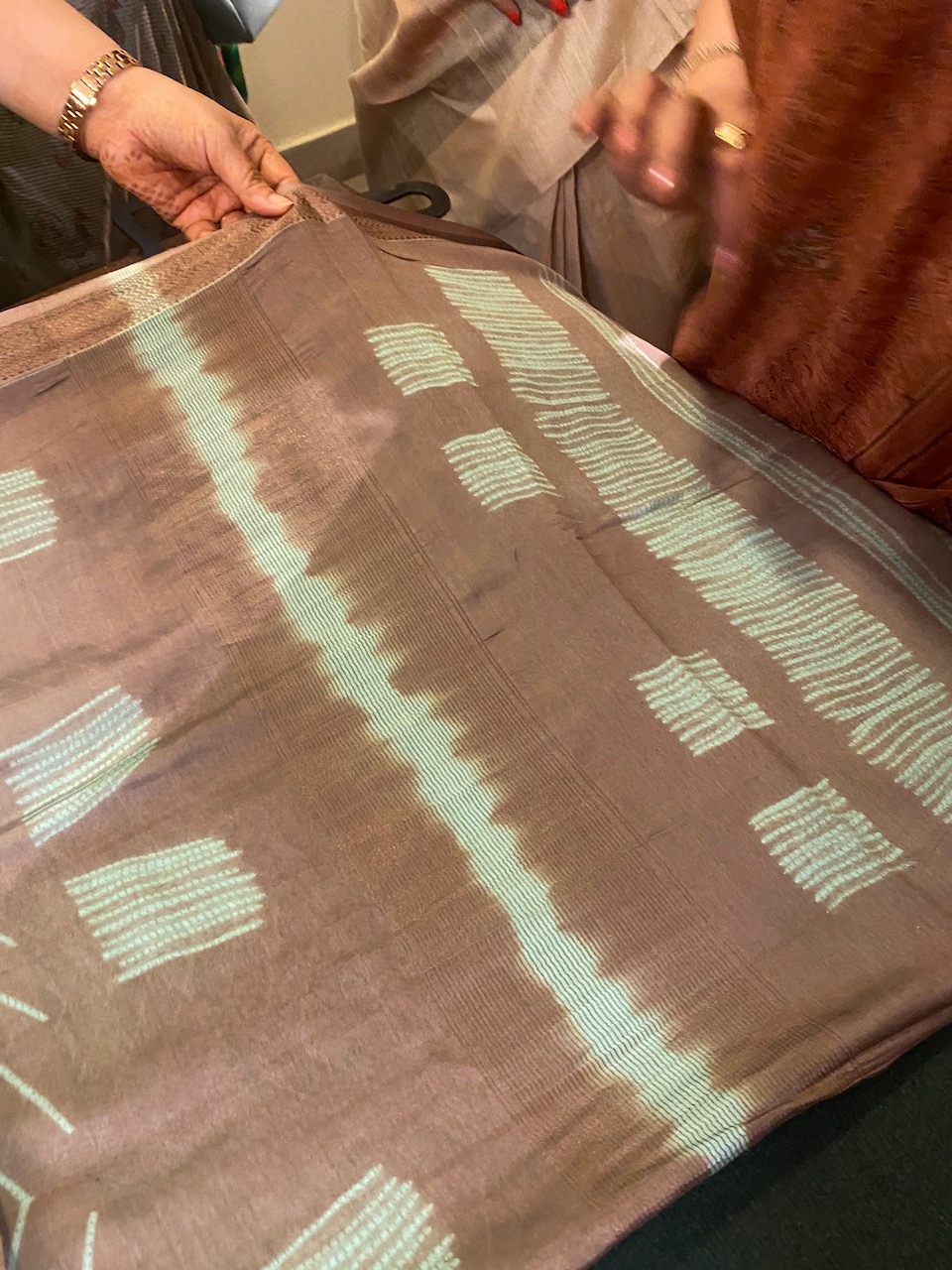
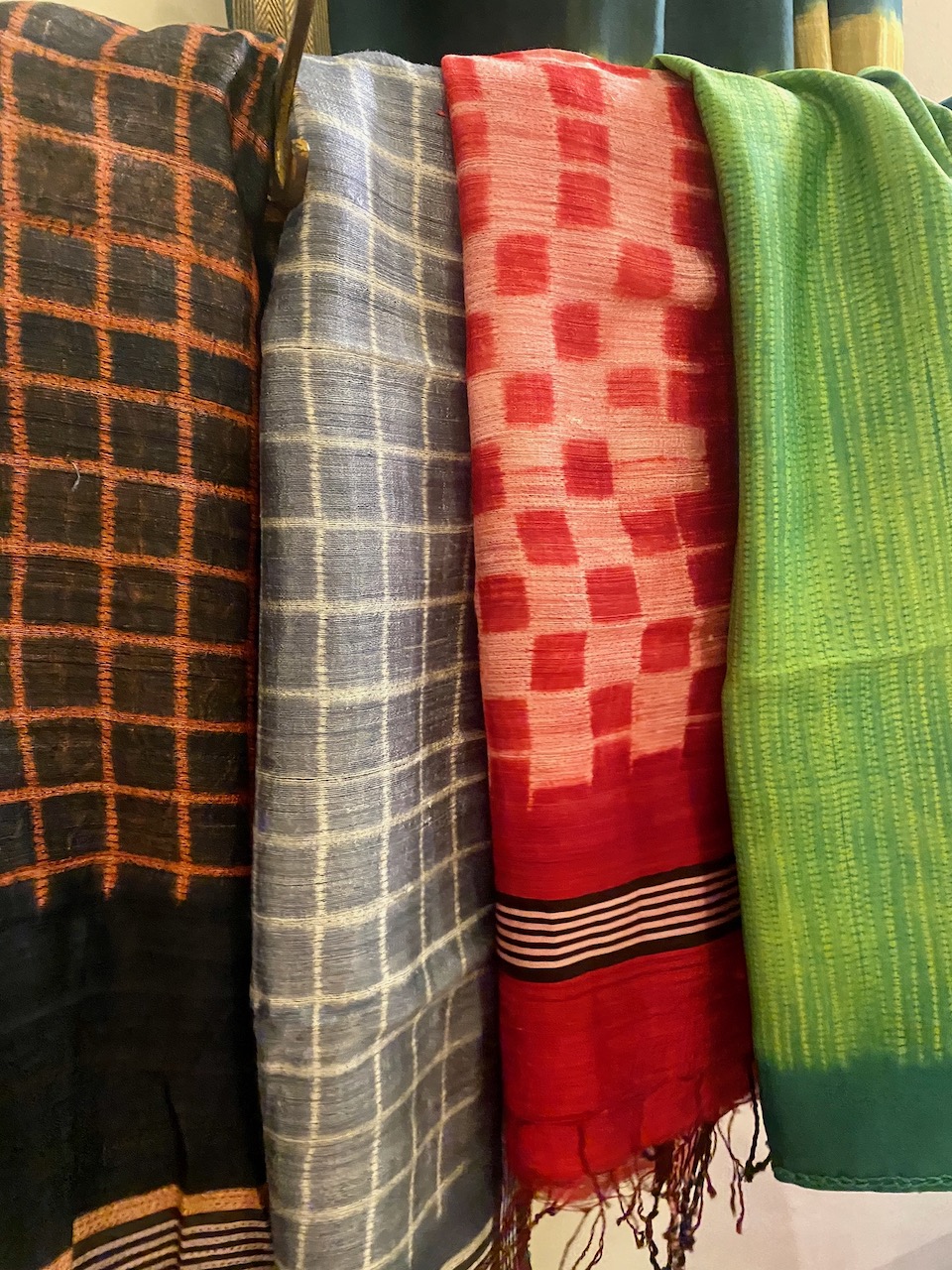
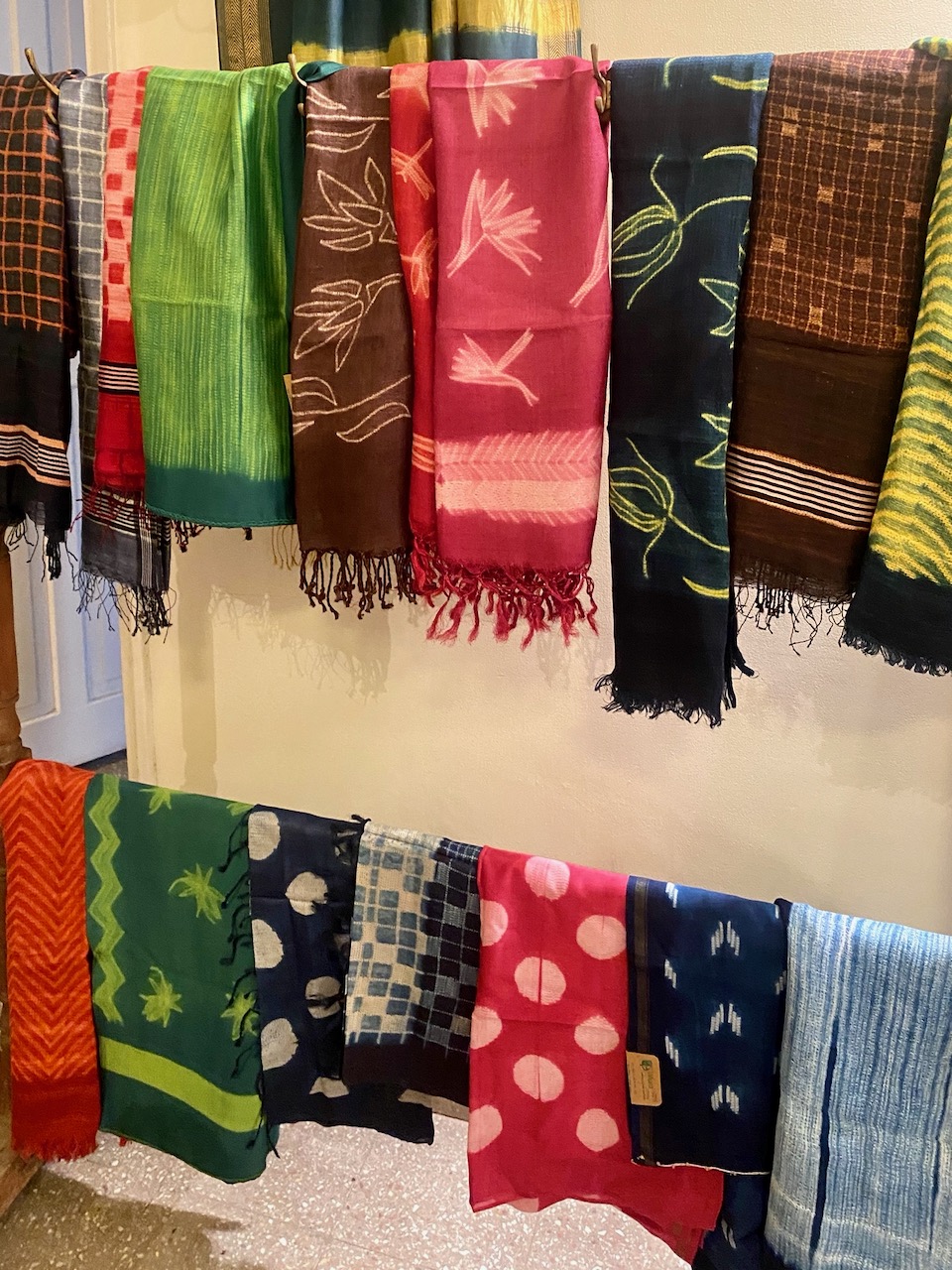
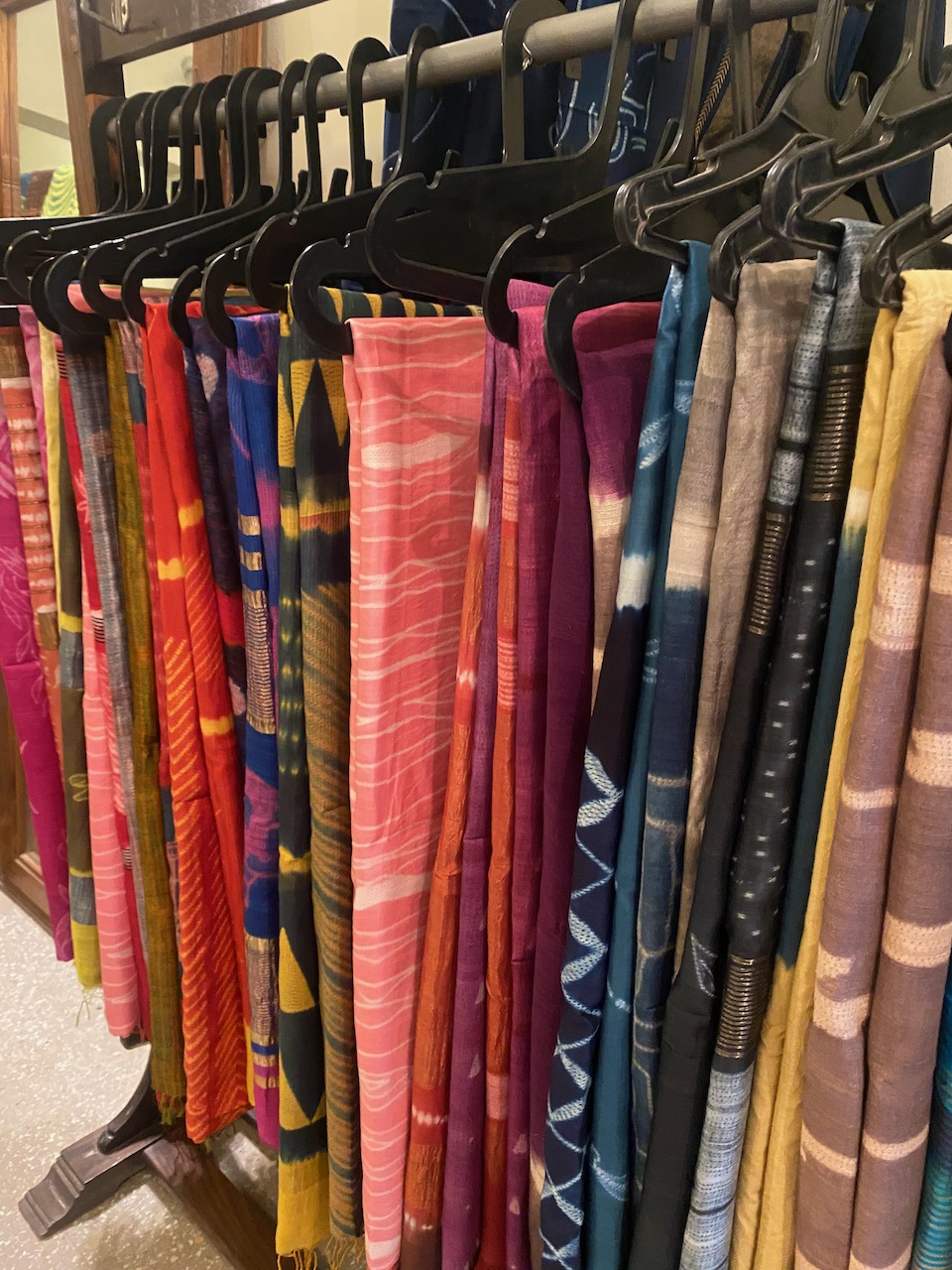
1998年に創業以来、質の高いSHIBORIの製品を生み出しているMURA。花や木々などの自然、鳥や牛などの動物、仏陀やガネーシャ、寺院といった歴史遺産などモチーフ多彩なは多彩。高度な技術を駆使して、布の上に独特の世界を表現している。天然の染料で染め上げられたサリーやストール、クルタは、やさしく身を包む。その慈愛に満ちたSHIBORI製品は、UNESCOの「優良手工芸品賞(Seal of Excellence for Handicraft Products)」を過去4回も受賞している。
Since its establishment in 1998, MURA has been producing high quality SHIBORI products, expressing a unique world on cloth using a variety of techniques with motifs of nature such as flowers and trees, animals such as birds and cows, and historical heritage such as Buddha, Ganesha, and temples. The sarees, stoles, and kurtas dyed with natural dyes. Mura has been awarded the Unesco Seal of Excellence 4 times.
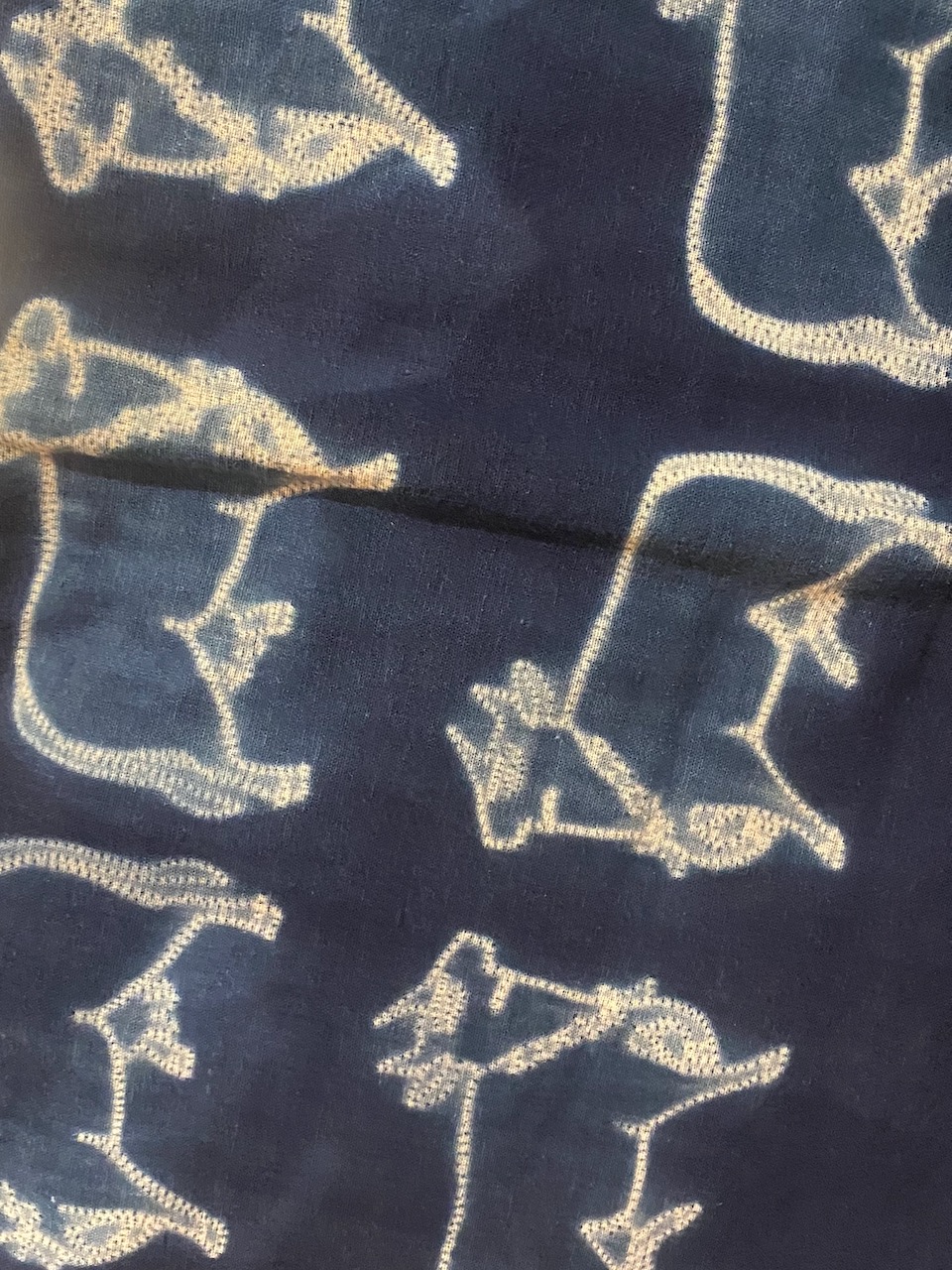
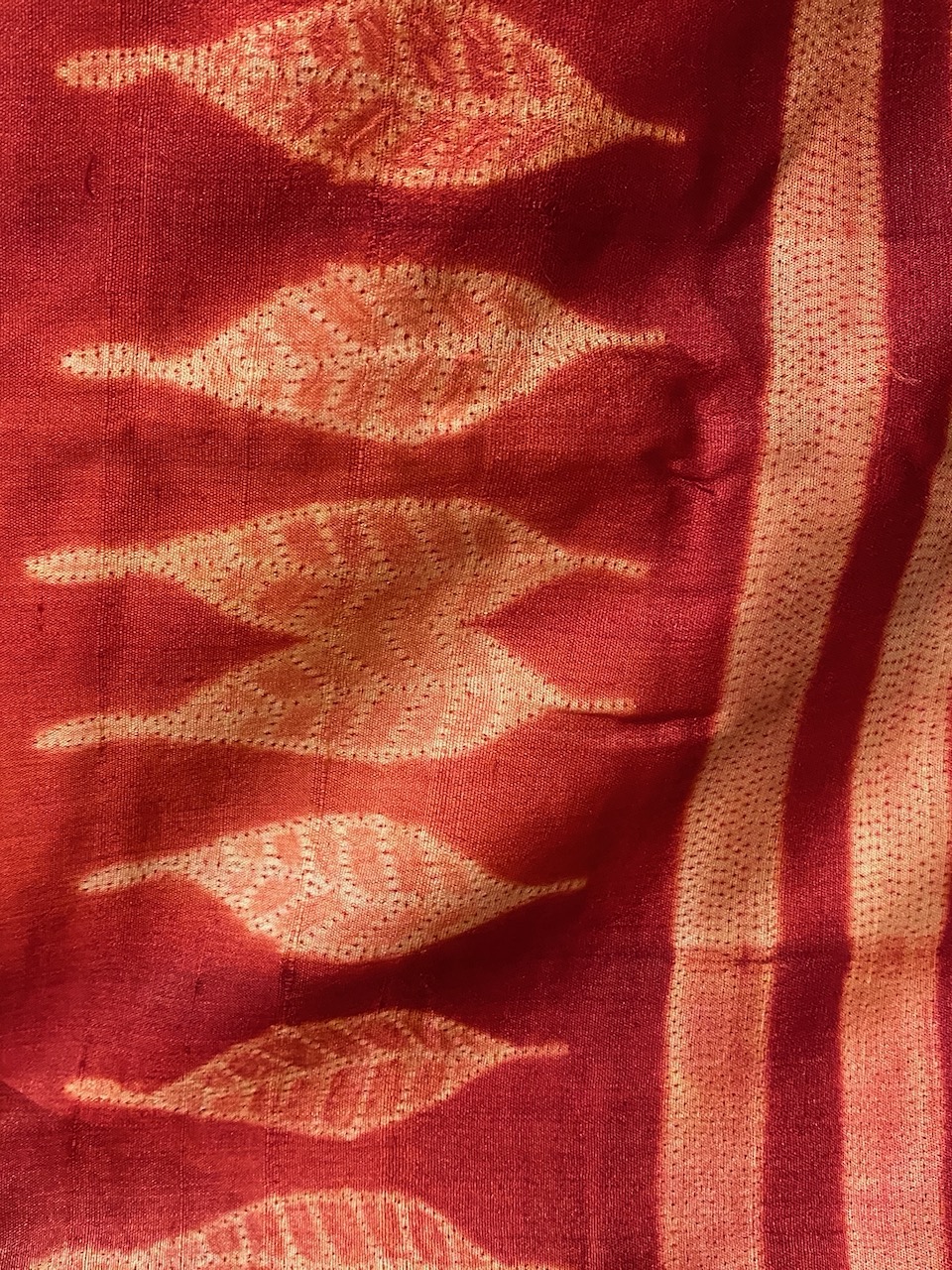
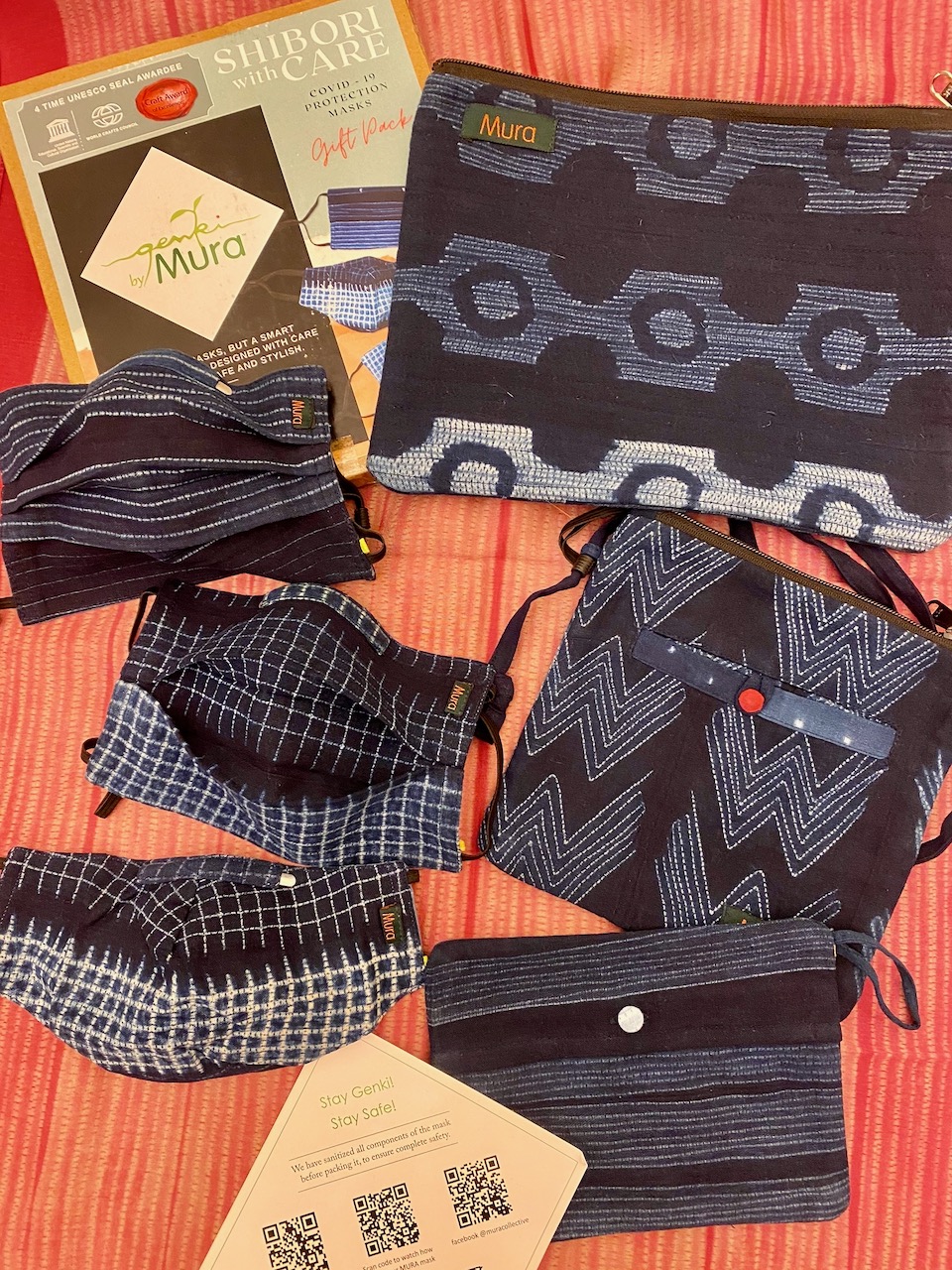
日本語の「村」を意味しているのであろうMURAはまた、地方農村の経済的に困窮している職人たちの支援も行う。COVID-19パンデミックにより、益々、苦境を強いられる中、独自のマスクセット「GENKI by MURA」を販売。職人たちを解雇することなく、活路を模索しているという。わたしは特別ゲストということで、ギフトとしてストールやポーチなどと共にいただいた。非常に使い心地がよく、うれしい。
MURA, which probably means “village” in Japanese, also supports economically disadvantaged artisans in rural areas, selling its own mask sets, “GENKI by MURA,” in the face of the increasing hardships caused by the COVID-19 pandemic. They are trying to find a way to make a living without laying off the artisans. (GENKI means health, vitality, and full of life in Japanese.)As a special guest, I was given this as a gift. It is very comfortable to use.😊
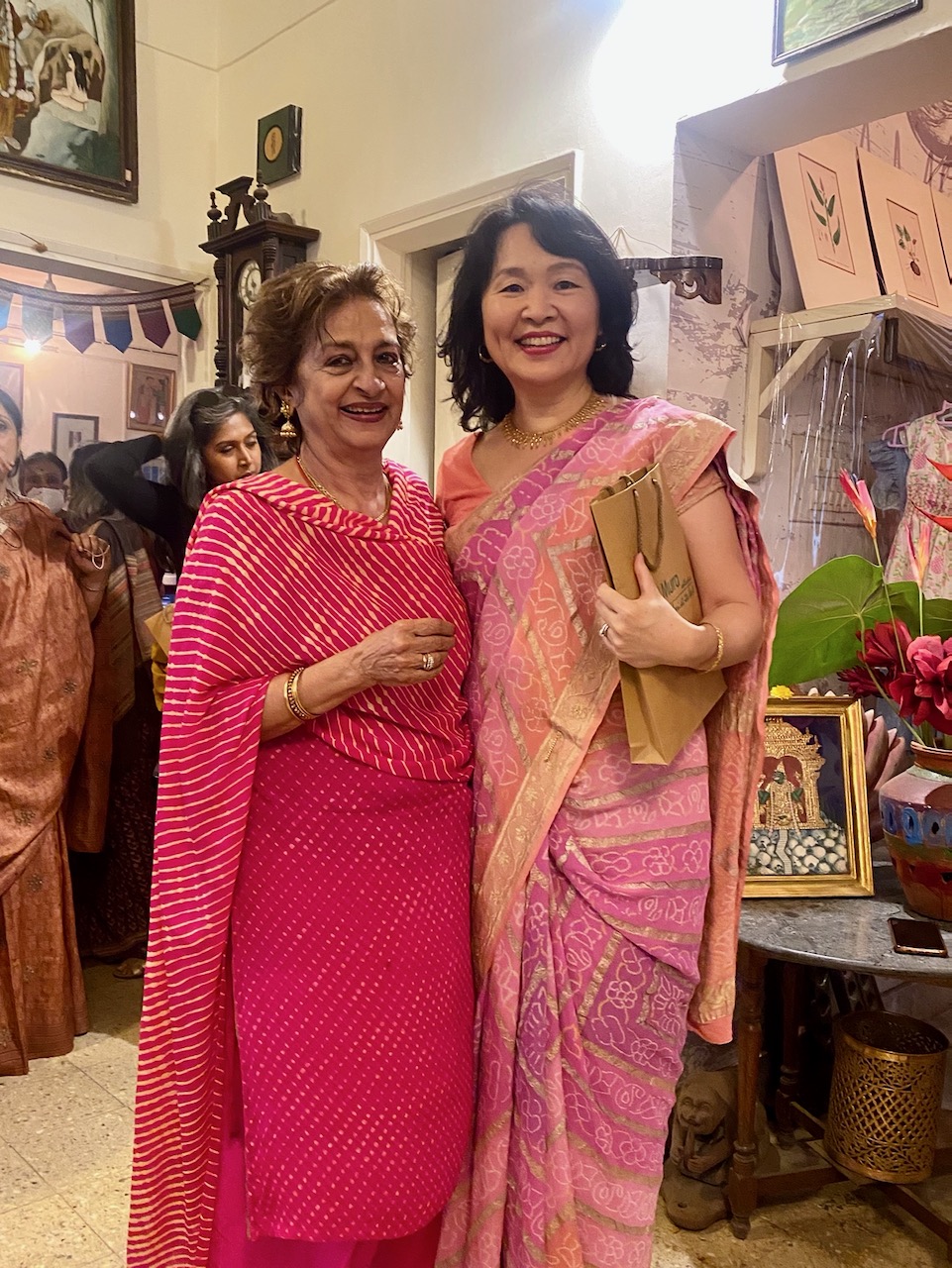
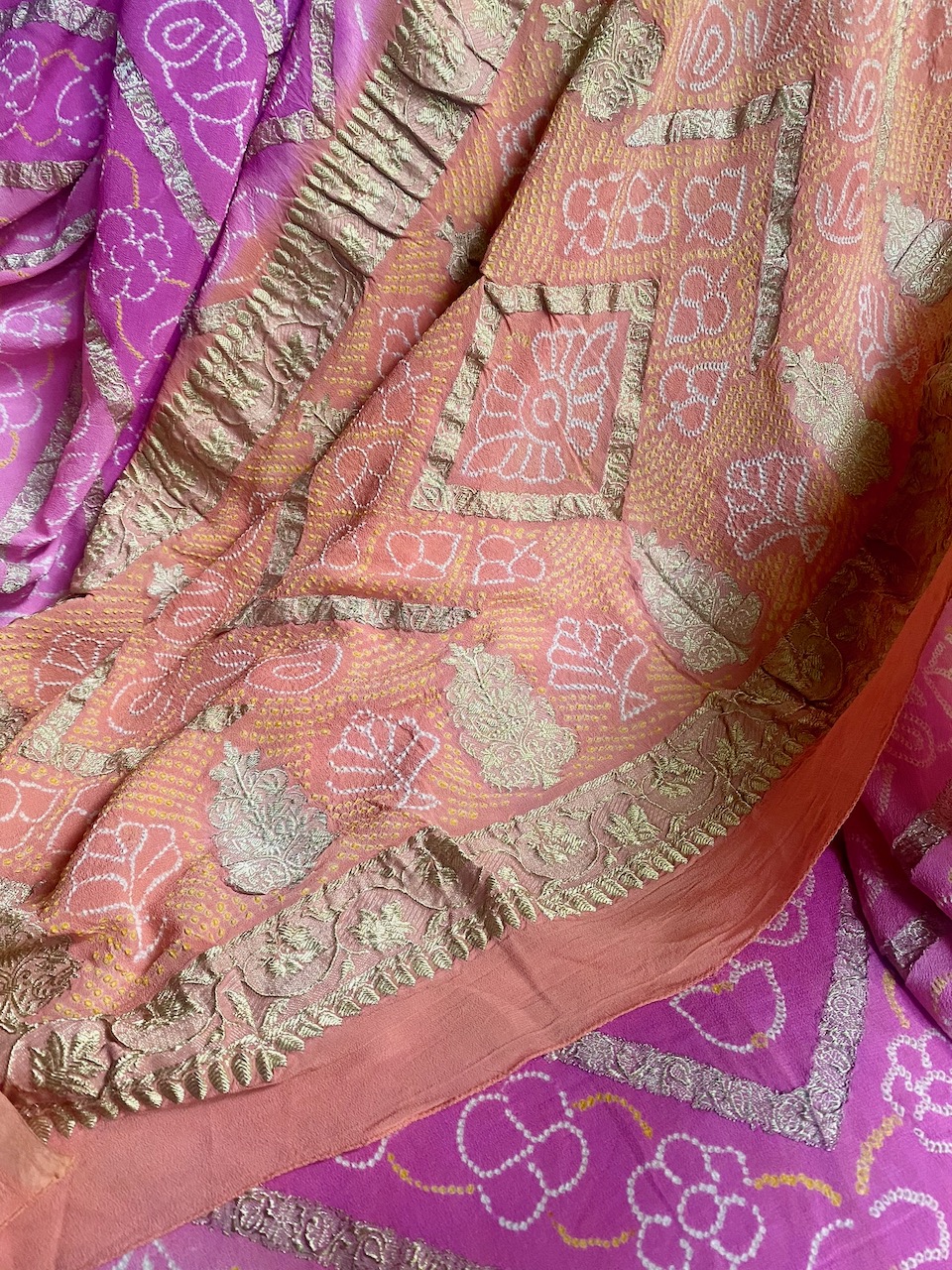
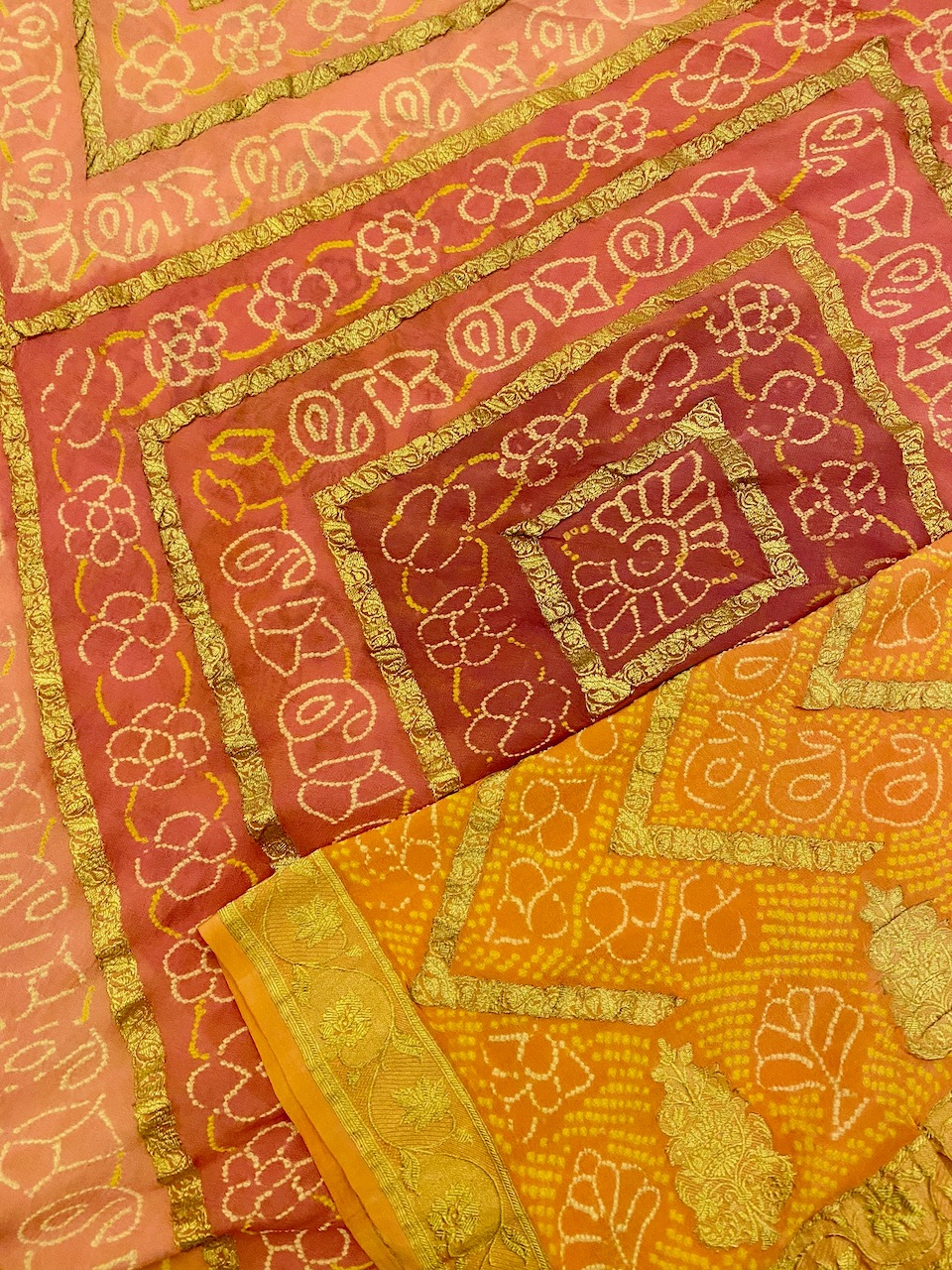
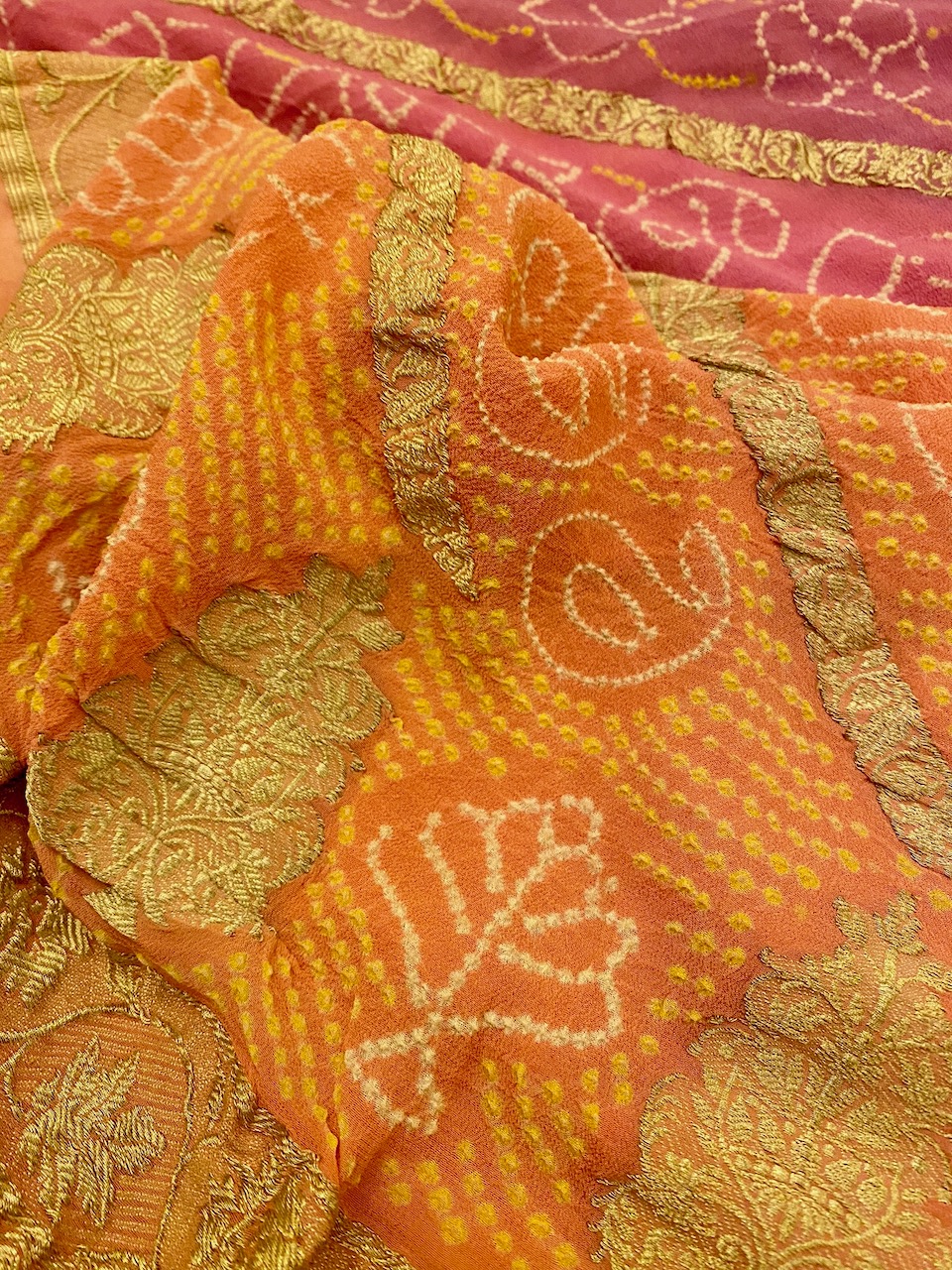
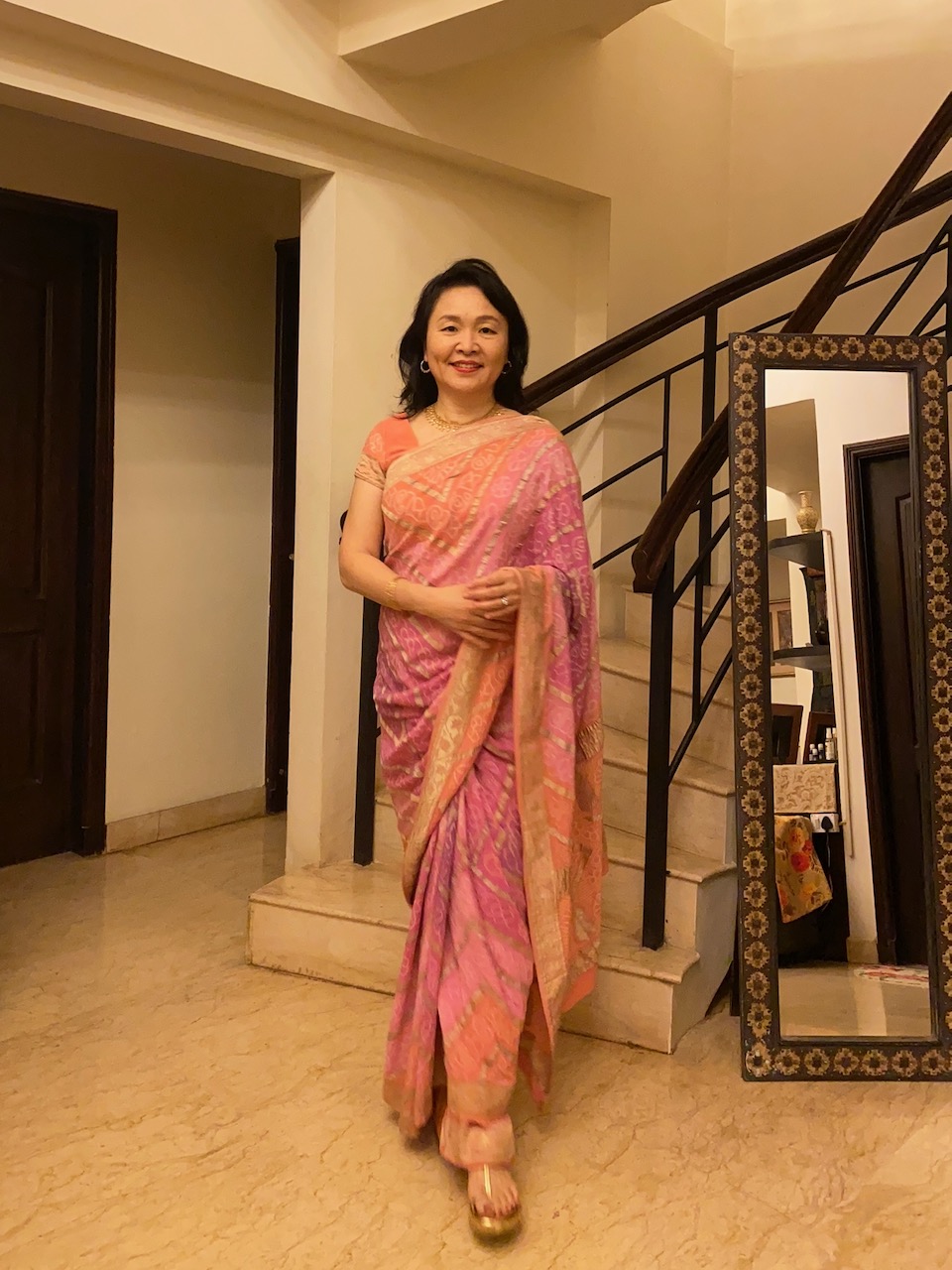
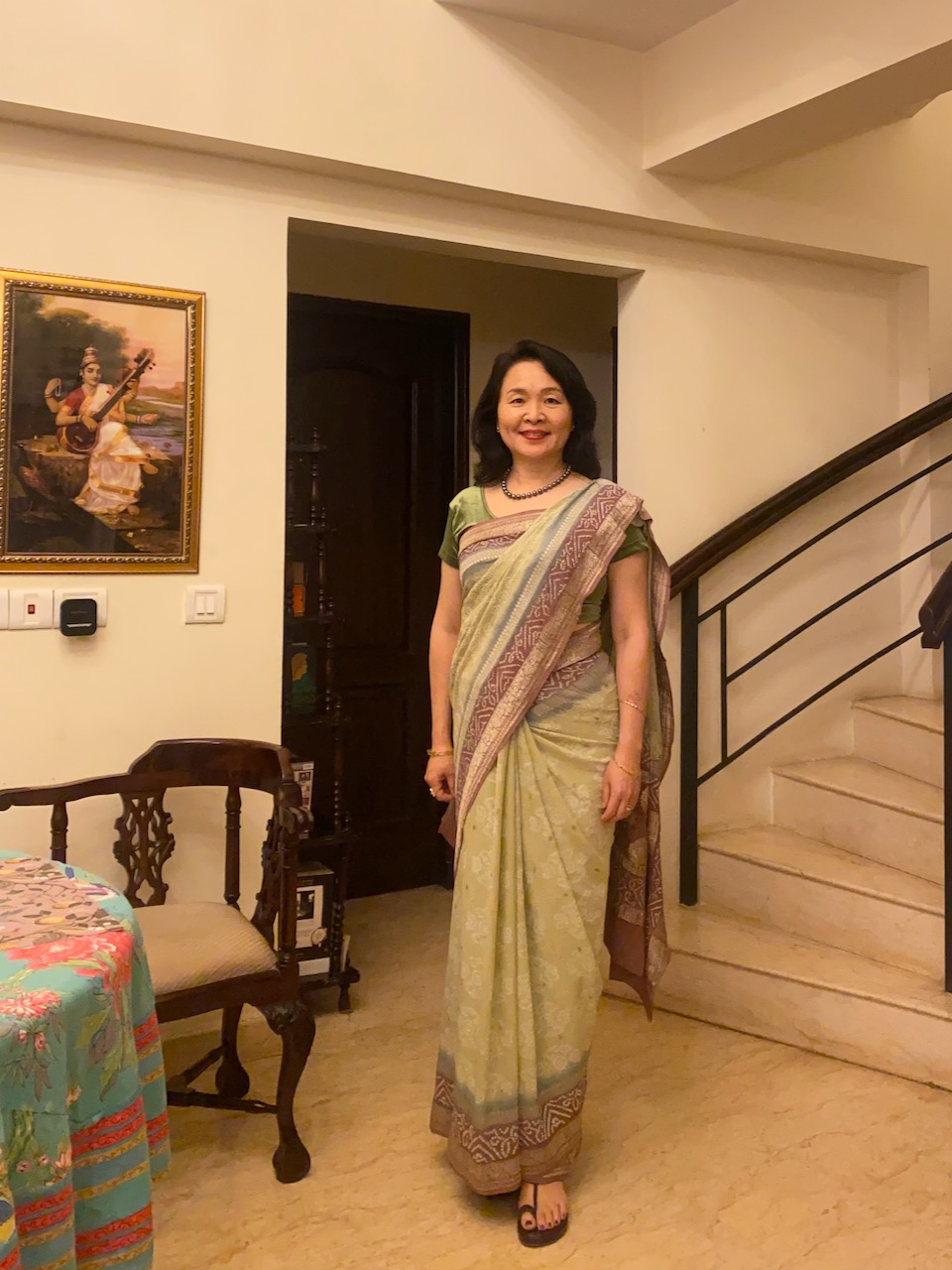
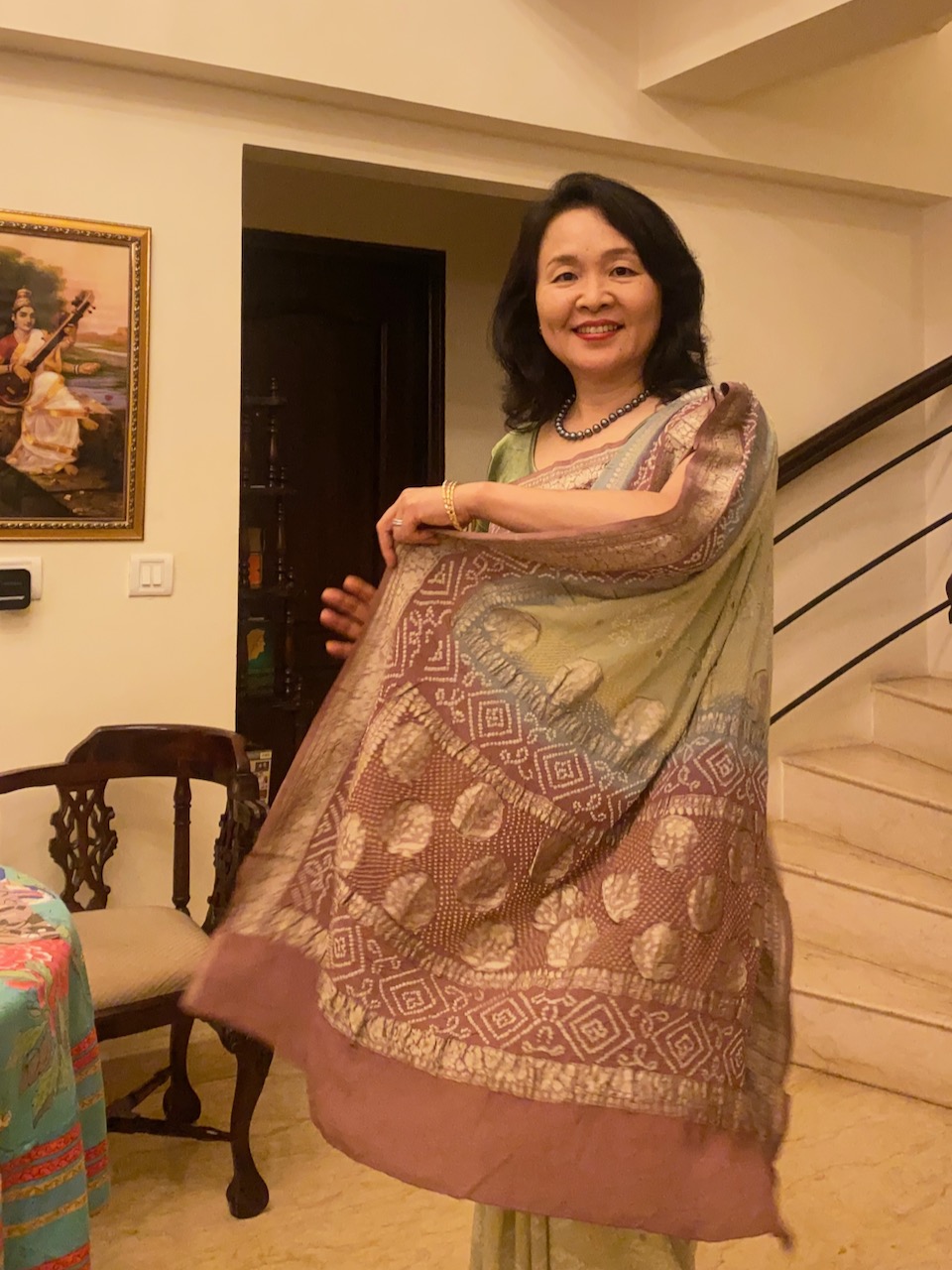
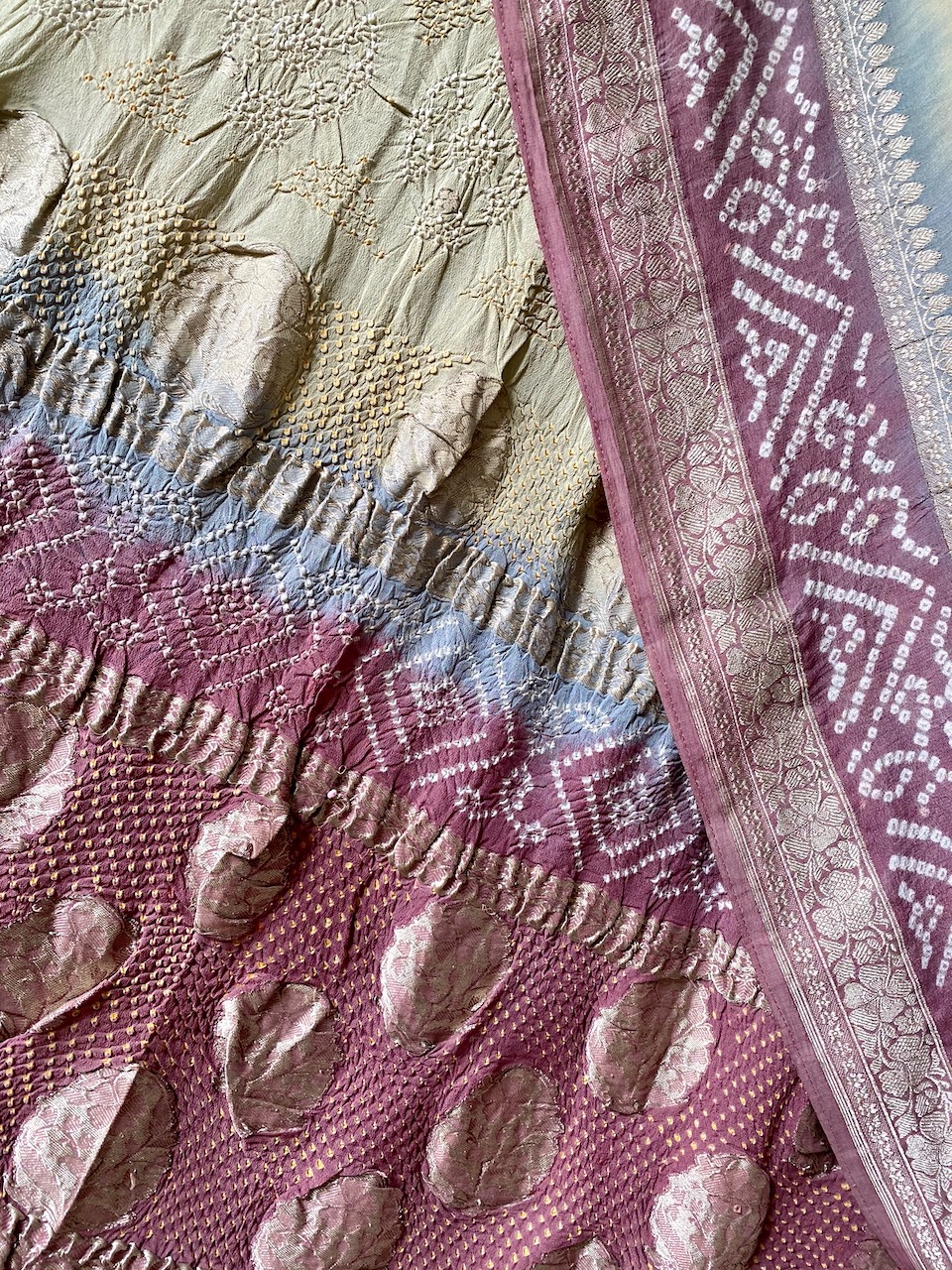
わたしが着ているのは、2008年にムンバイで購入したBandhaniのサリー。子供のころに着た浴衣の兵児帯(へこおび)を思わせる懐かしさもある。柔らかな絹の一面に施された絞りは、布に伸縮性を与え、心地よく身体にフィットして着崩れしにくい。
I was wearing a Bandhani saree, which I bought in Mumbai in 2008. The colors and patterns remind me of the yukata (informal light cotton kimono) sashes I wore as a child. It gives me a nostalgic feeling. The tie-dyeing on one side of the soft silk gives the cloth elasticity, allowing it to fit the body comfortably and prevent it from falling apart.
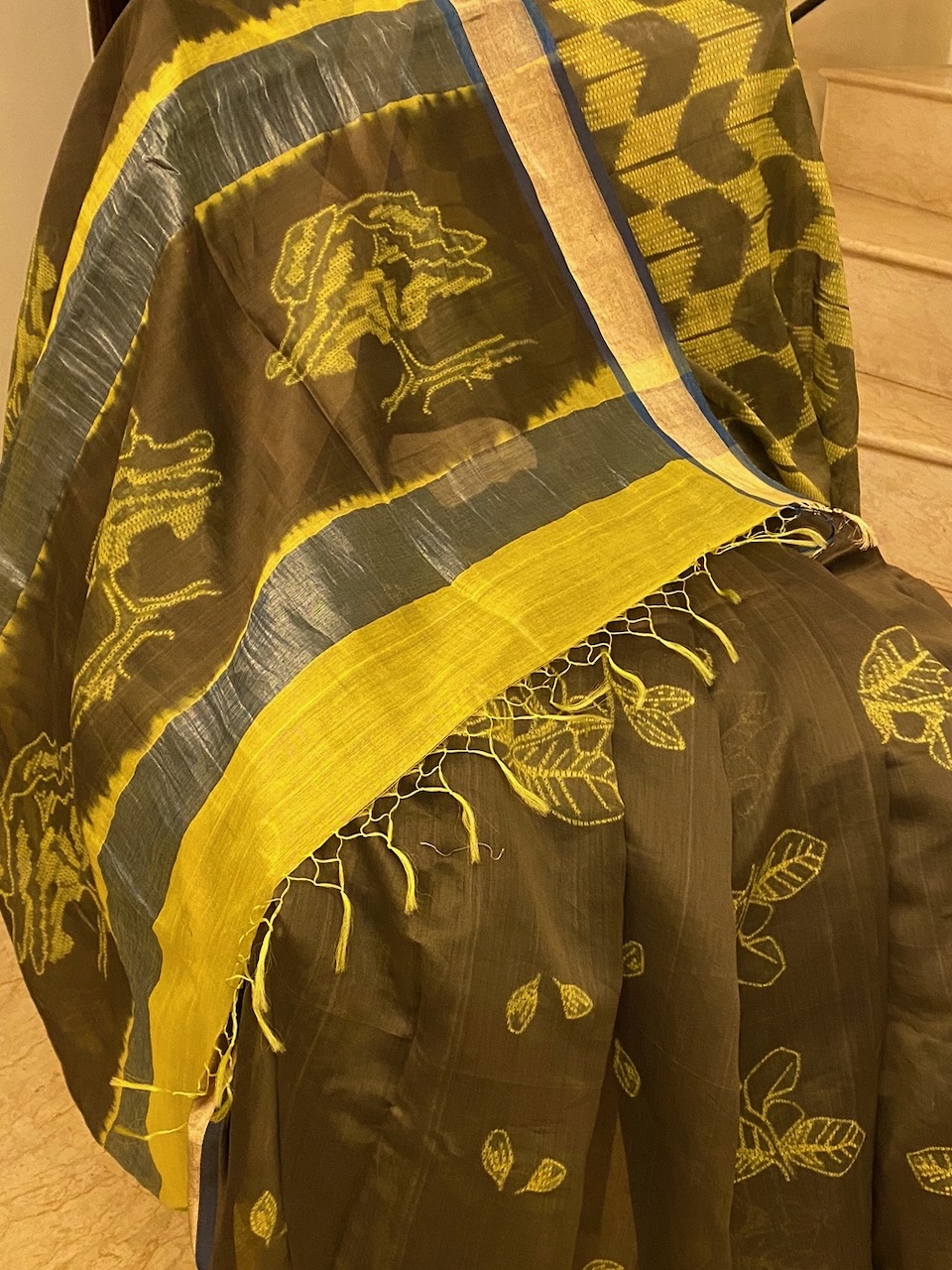
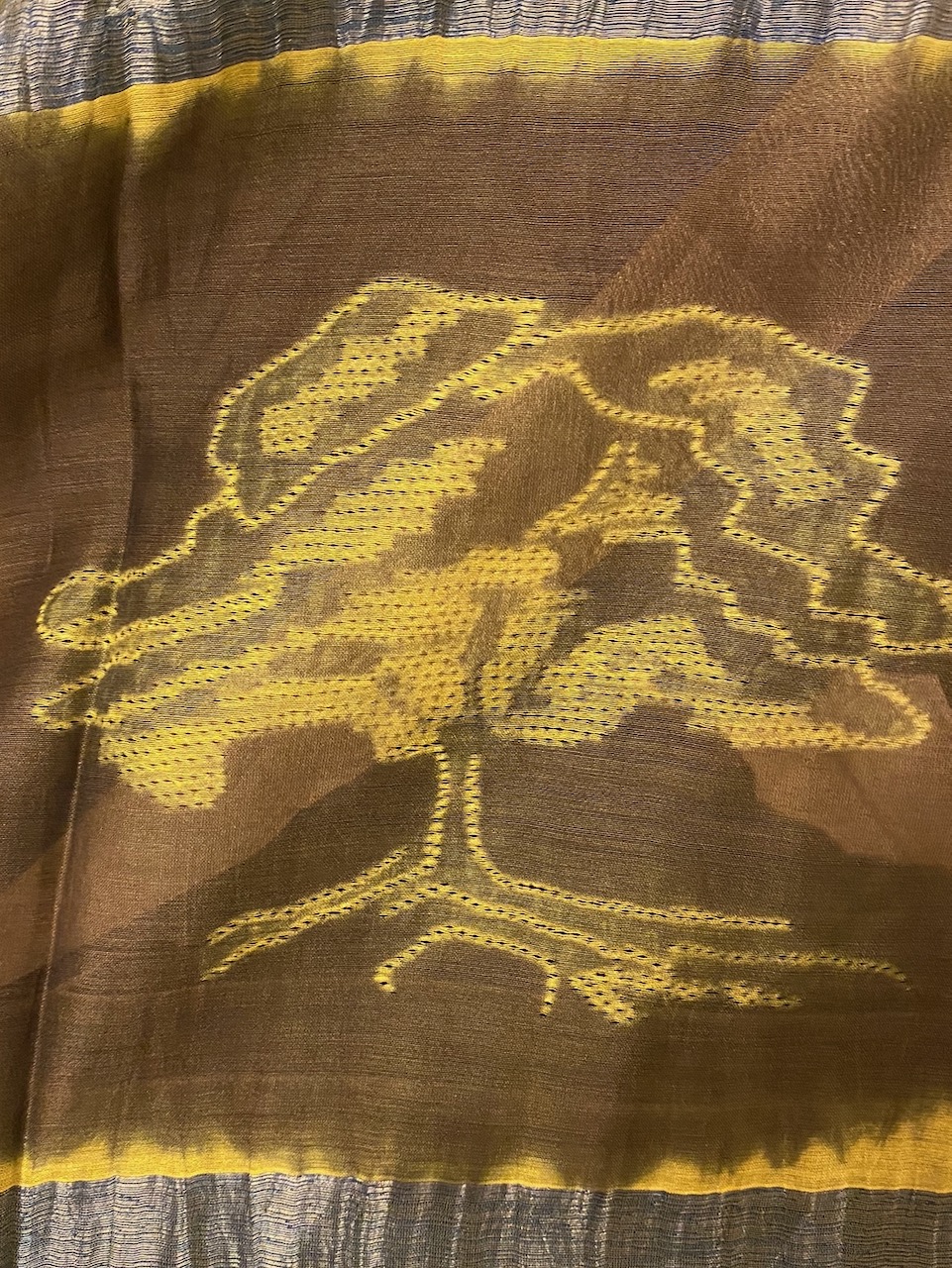
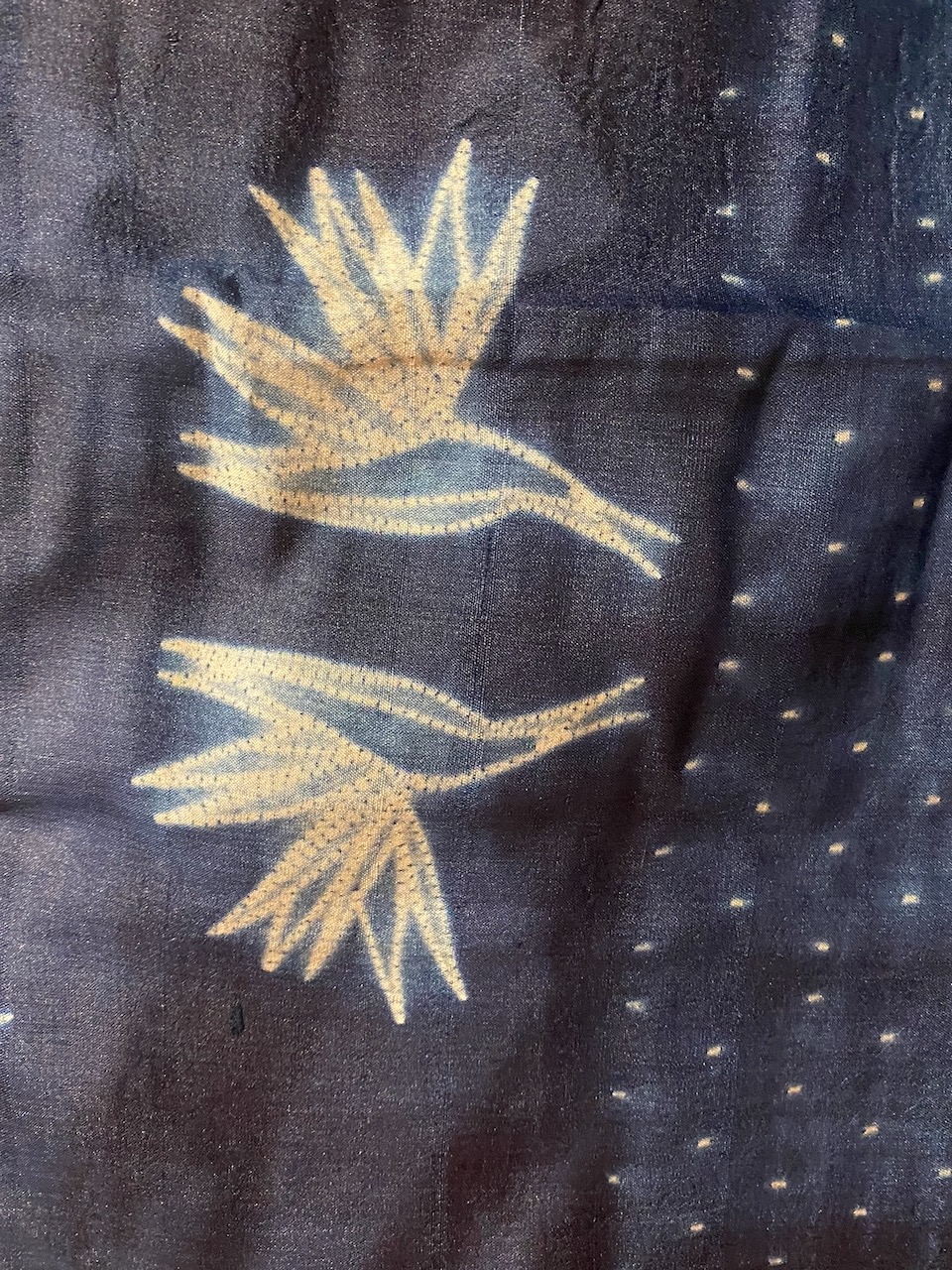
わたしは、アルジュナの木がモチーフになった絹のサリーを購入した。根を張る大樹、葉っぱや花、灰色、藍色、黄色の配色、ブラウスとなる部分の矢絣風の模様など、すべてが気に入った。ブラウスを仕立てて着用するのが楽しみだ。
I bought a silk saree with a motif of Arjuna trees. I liked everything about it: the large tree with its roots, the leaves and flowers, the color scheme of gray, indigo, and yellow, and the Japanese arrow pattern on the blouse. I am looking forward to tailoring the blouse and wearing it.
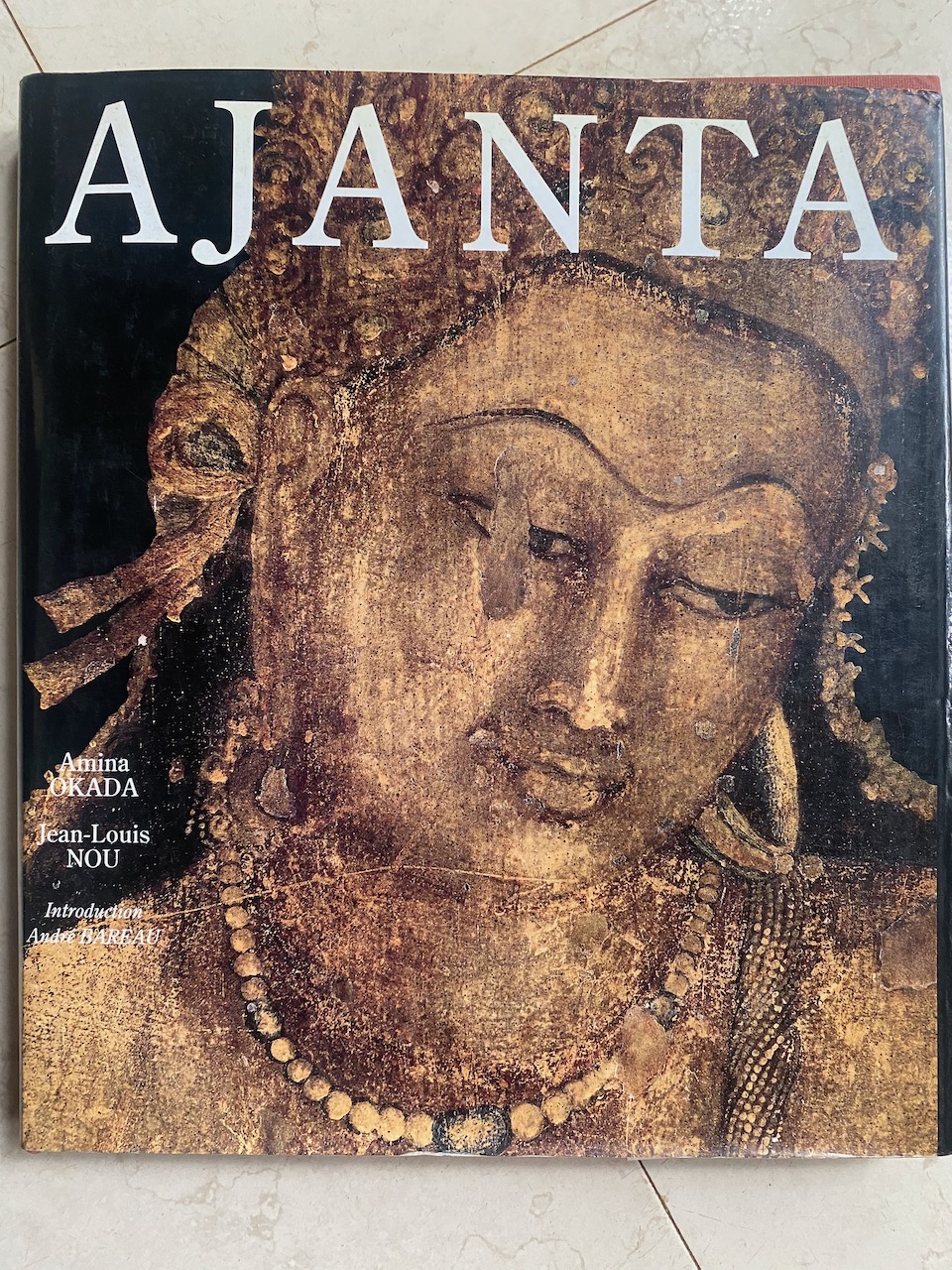
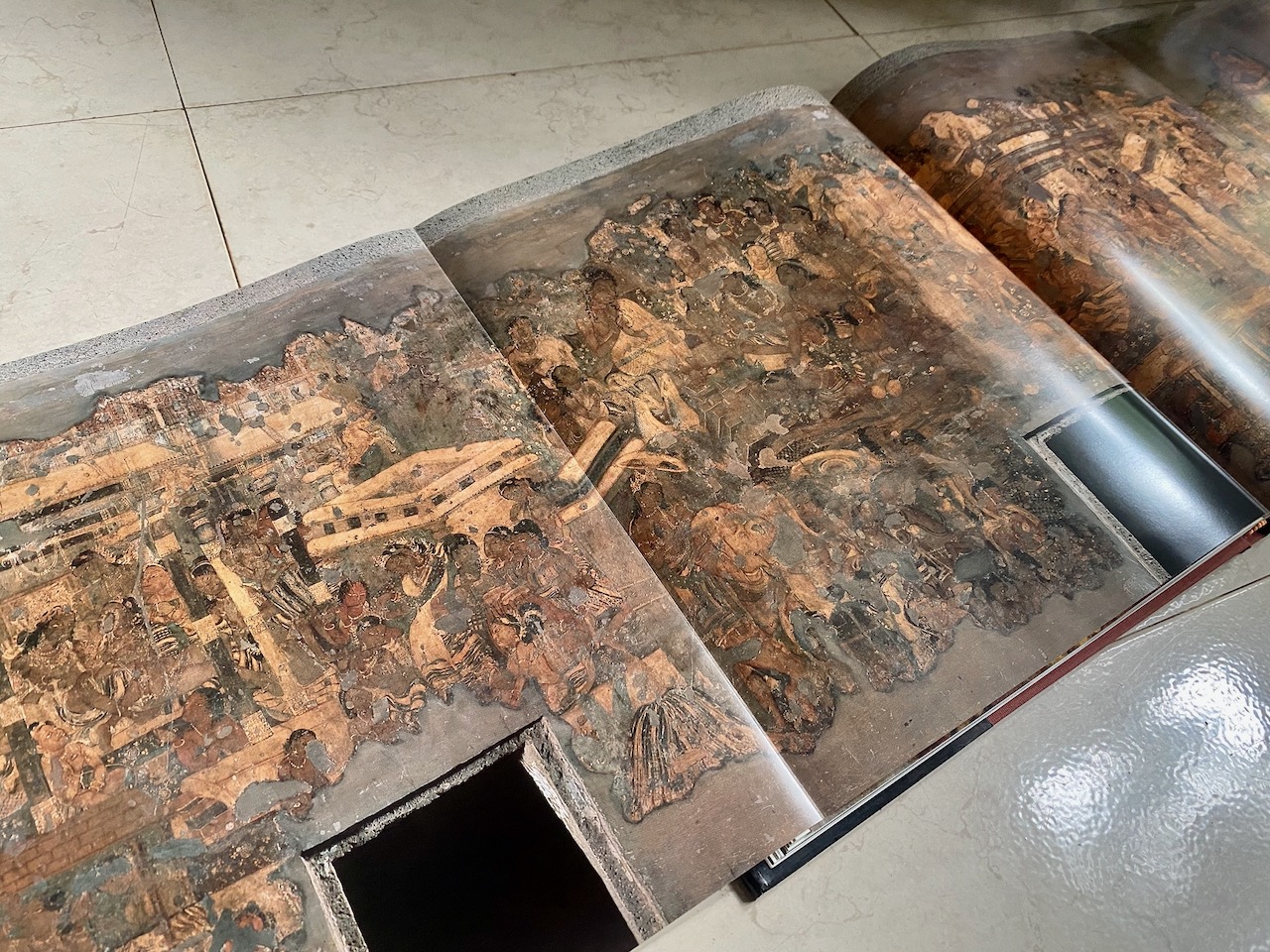
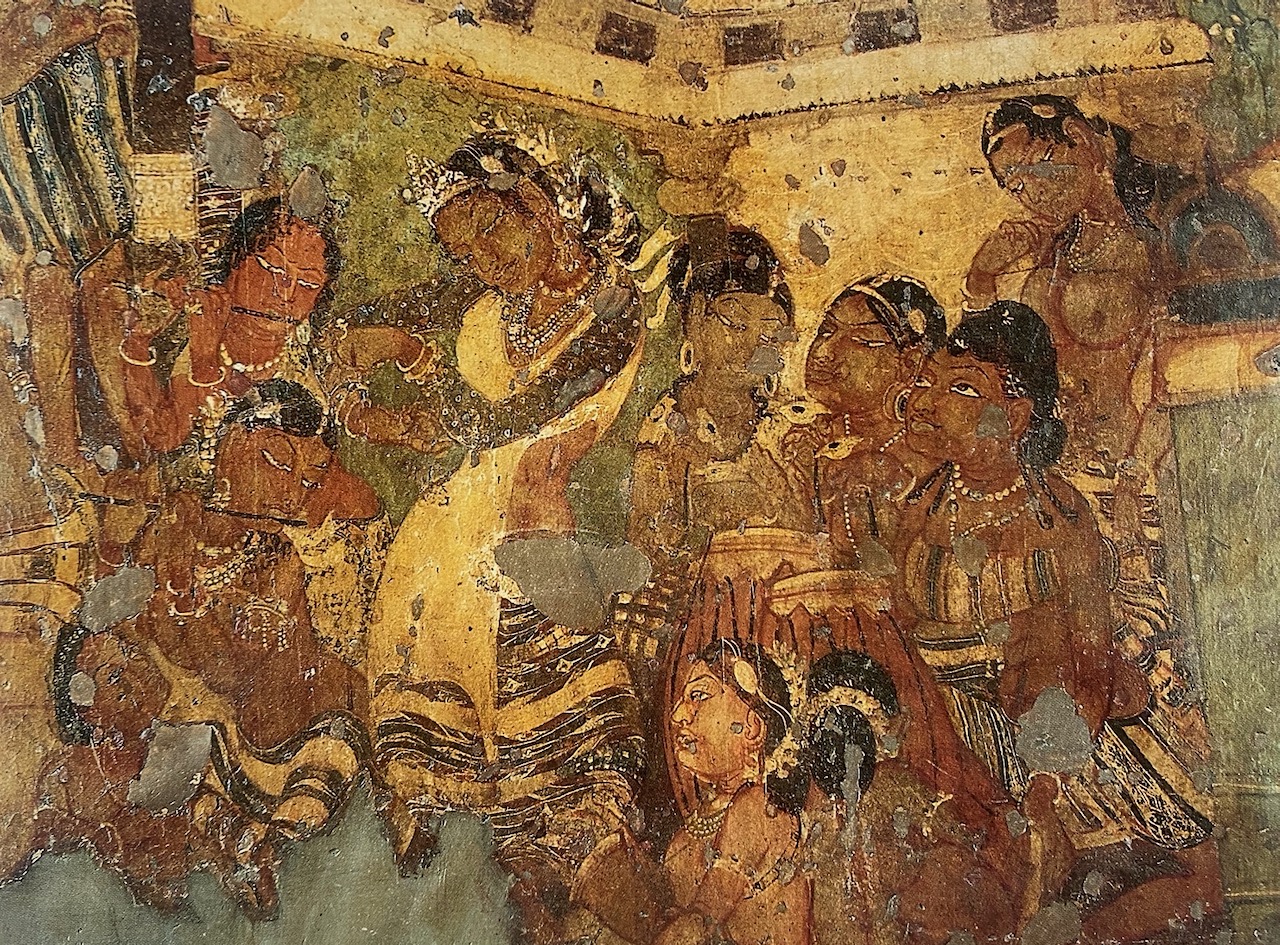
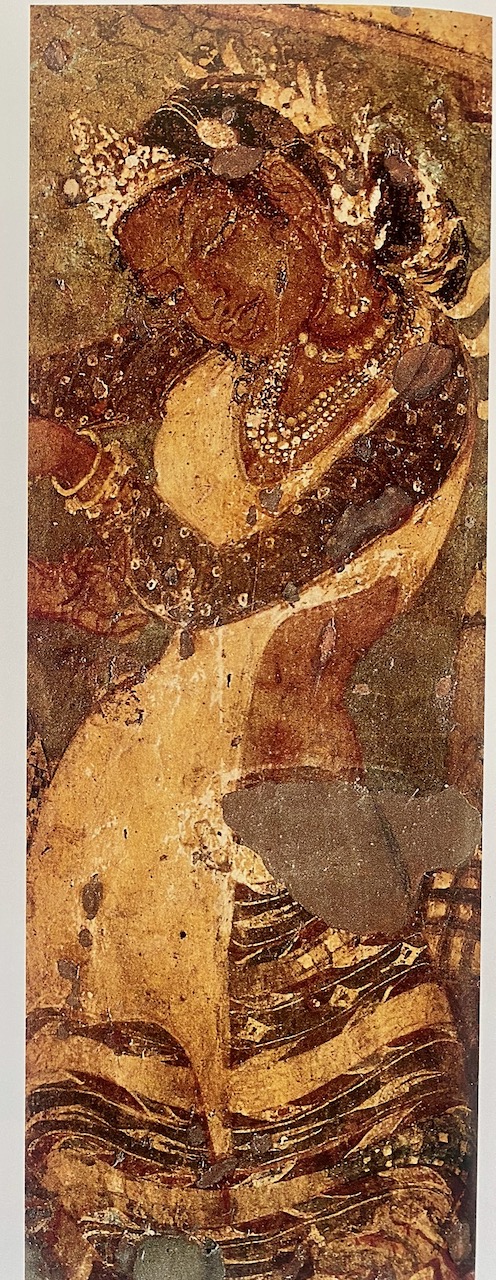
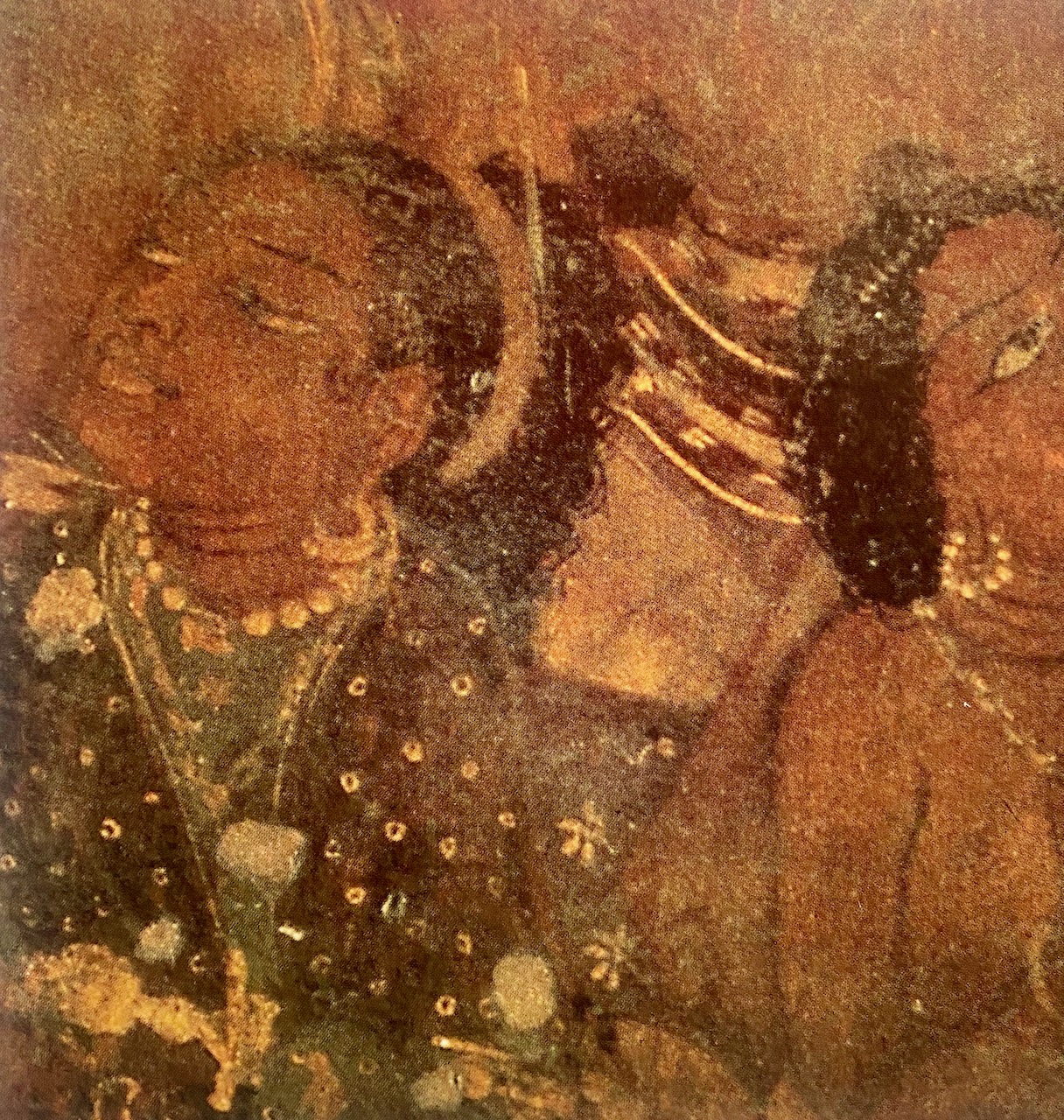
今回、絞り(Bandhani)の歴史を調べていたところ、アジャンター洞窟寺院の第一窟、仏陀の生涯を描いた絵にバンダーニの衣類が見られるという。わたしが最も衝撃を受けたインドの世界遺産の一つがアジャンター&エローラ遺跡。訪れた直後に購入していた写真集を広げたところ……それらしき絵を発見! トップは絞り、ボトムは絣と、わたし好みのファッションで踊る彼女に目が釘付けだ。
This time, when I was researching the history of Bandhani, I found that Bandhani clothing can be found in the first cave of the Ajanta cave, in a painting depicting the life of Buddha. When I opened up the photo book I had purchased right after my visit, I found the picture! The dancing lady is wearing Shibori top and Ikat bottom. How lovely!
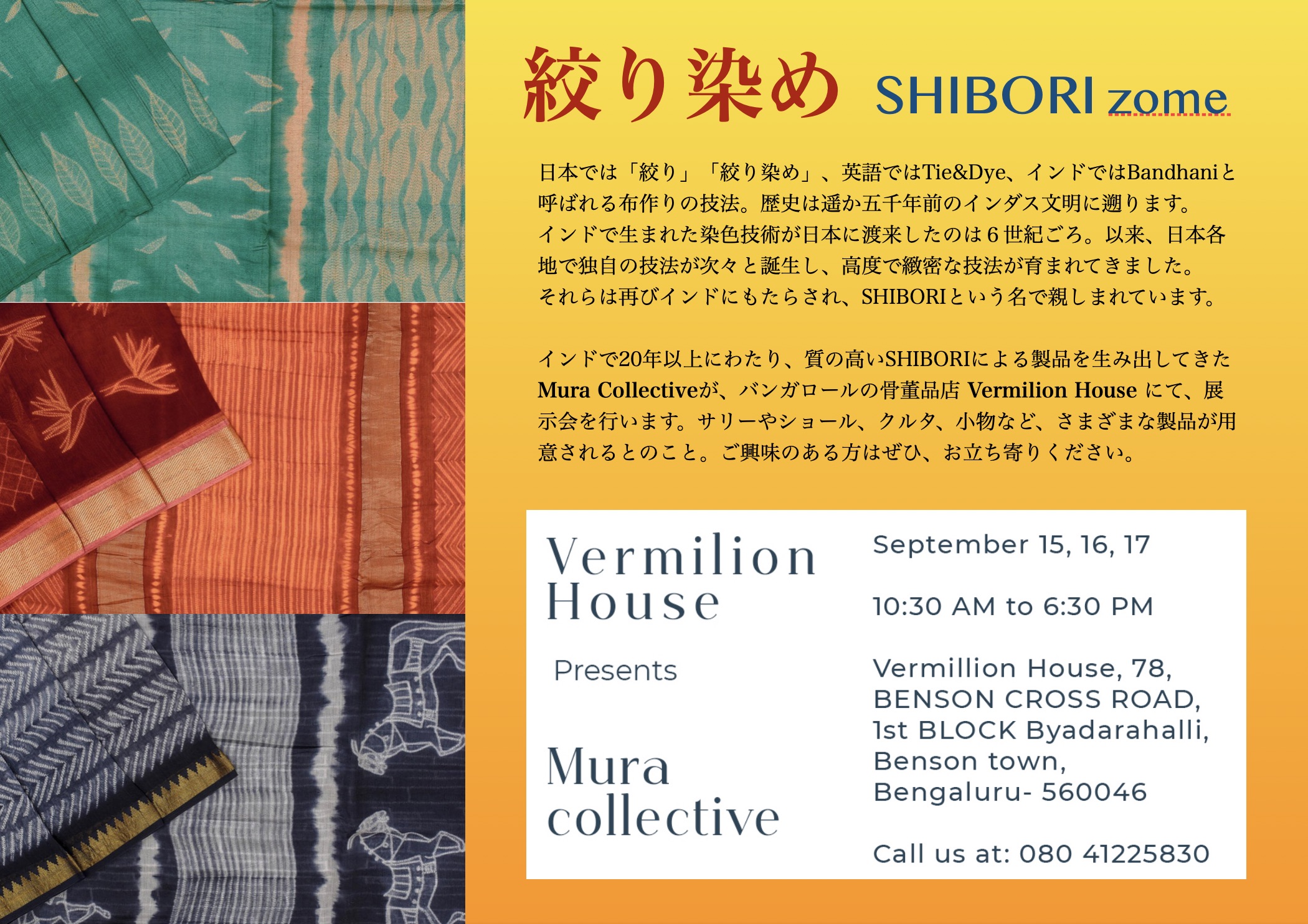
※展示会は17日まで開催されている。バンガロールにいらっしゃる方はぜひ足を運んで欲しい。また、オンラインでも購入できる。
The exhibition is open until the 17th. If you are in Bangalore, please come and visit. You can also purchase online.
➡︎ https://linktr.ee/muracollective
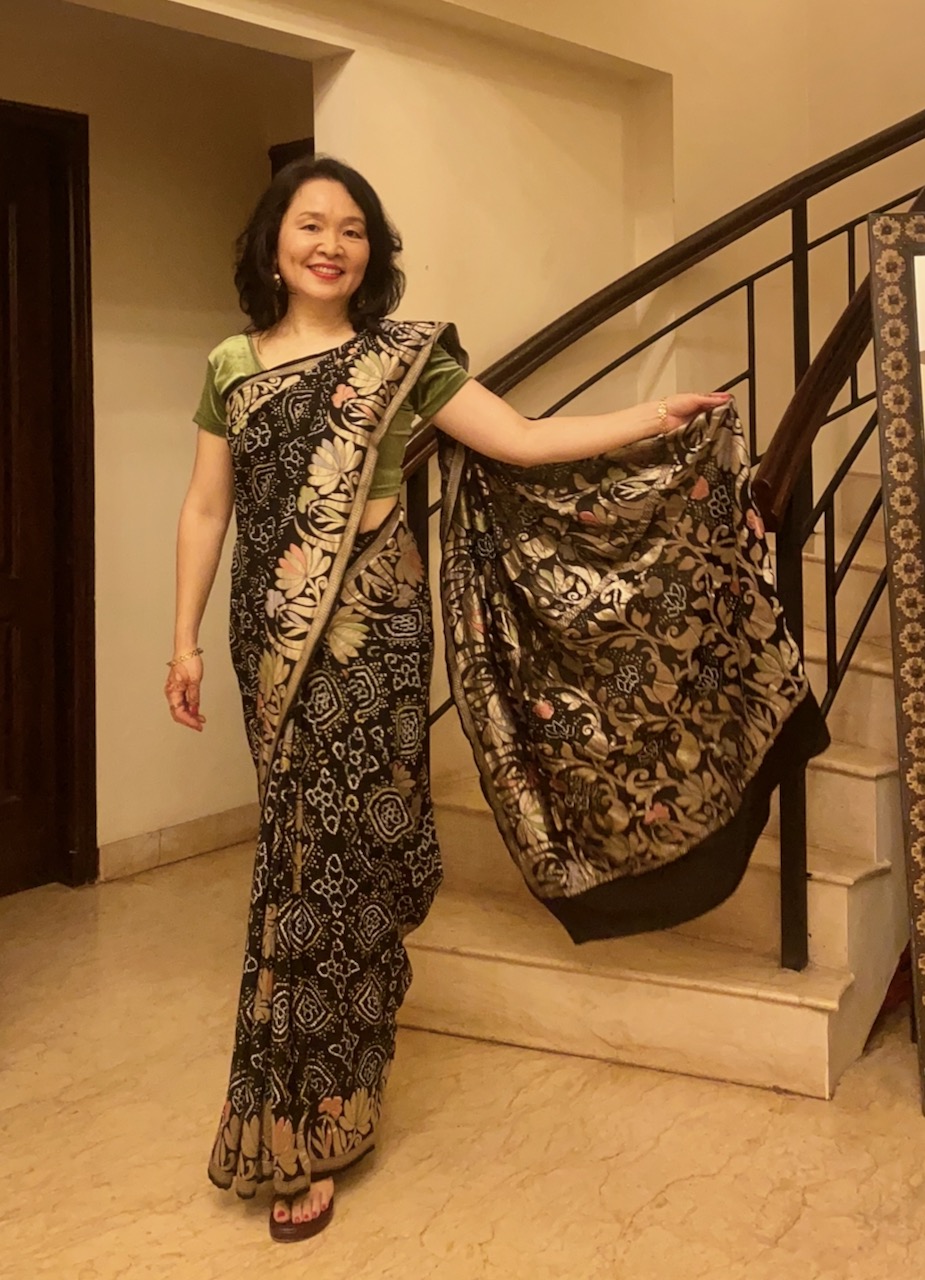
🥻その他の絞り染めサリー
 インド百景 2021-2025
コメントを残す